
Notes on judgement, neutrality, and the quiet work of refereeing
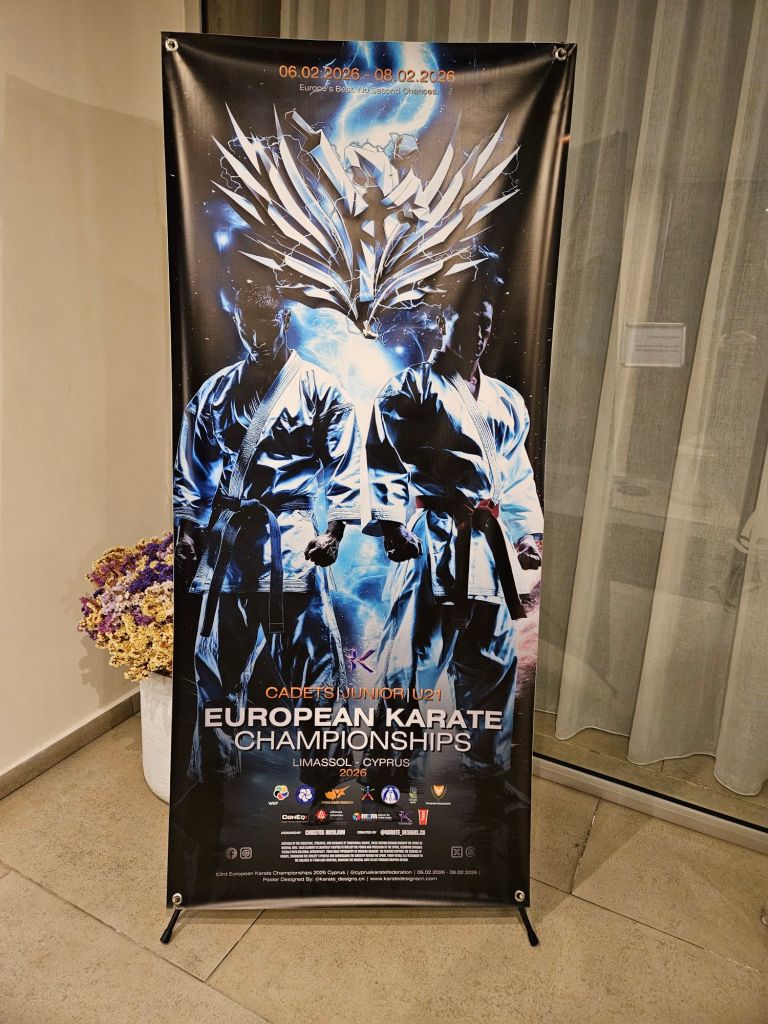
I’ve just finished day one of six days of referee exams in Cyprus. The exams also form part of the Cadet, Junior & Under 21 European Championships.
To maintain standards, referees are examined regularly — national, continental and world level.
Theory. Practical. Judgement.
It’s not a badge you earn once and keep forever.
You prove it.
Again and again.
We expect excellence from athletes.
It’s no different for referees.
We chase excellence.
We chase perfection.
Even though we know we’ll never quite reach it.
Which raises an odd question:
What does a perfect match look like from a referee’s perspective?
Not lots of whistles.
Not centre stage.
A perfect match is almost invisible.
Unbiased.
Calm.
Positioned well.
Close enough to see everything.
Quiet enough not to disrupt anything.
Invisible when you can be.
Visible and decisive when you have to be.
Step in only when it matters.
Protect safety.
Hold the boundaries.
Then step back out again.
If you’ve done it well, nobody really notices you.
—
What makes this week harder is that we’re working from a new rule book.
Updated.
Tweaked.
Subtle changes in wording that quietly change everything.
A point scored a fraction earlier.
A slightly different interpretation of contact.
A sequence that now counts — or doesn’t.
The sort of changes that show up in exam questions.
But more importantly, show up in real matches.
It’s strange how quickly you can get comfortable.
After years of refereeing, some parts become instinctive.
Positioning. Timing. Signals.
You almost run on autopilot.
And then the rules move.
Suddenly you’re second-guessing decisions you used to make without thinking.
Replaying scenarios in your head.
Checking language.
Unlearning muscle memory.
Trying to stay fair.
Trying to stay sharp.
Trying to pass the exams.
It’s uncomfortable.
But maybe that’s the point.
Comfort is probably the enemy of good judgement.
—
We get small pockets of downtime between the different exam elements.
Time to sit in the shade, drink coffee, and catch up with colleagues from all over Europe.
And that’s when you remember who referees actually are.
Not professionals.
Not career officials.
Just… people.
Bankers.
Business owners.
Teachers.
Civil servants.
Soldiers.
Retired.
Students.
Labourers.
All walks of life.
Most using annual leave and paying their own way.
All chasing the same quiet goal: to be a little better than they were last time.
Apparently this is the biggest referee course in World Karate Federation history.
Which is impressive when you realise something most people never see:
Almost all of these referees are volunteers.
They pay for the flights.
The hotels.
The exams.
All to stand in the middle of someone else’s moment and make sure it’s fair.
No medals.
No prize money.
No headlines.
Just responsibility.
And judgement.
—
Back home there’s been a changing of the guard.
Some referees I’ve stood alongside for years under the England badge are now here representing different home nations.
It’s a reminder that the structures around us move more than we do.
The people are constant.
The affiliations aren’t.
And then, inevitably, the other layer creeps in.
Karate politics.
Always just under the surface.
Who gets selected.
Who doesn’t.
Which federations are stable.
Which ones are arguing.
Whose legitimacy is being questioned.
Who’s allowed to attend.
Who suddenly isn’t.
You realise pretty quickly that even in a system built on fairness and neutrality, politics still finds a way in.
Which leaves an uncomfortable question sitting in the back of your mind:
How do you stay completely neutral on the tatami…
when forces outside the tatami might quietly shape your career anyway?
—
The longer I do this, the more I think good refereeing isn’t about control.
It’s about stewardship.
Hold the space.
Apply the rules fairly.
Step in when you need to.
Stay out of the way when you don’t.
Invisible most of the time.
Decisive when it counts.
If you get it right, the match belongs to the athletes.
Not you.
Maybe that’s the point.



 Northern Ambiguity
Leave a reply to David Johnson Cancel reply