Permission, belonging and the culture of public space
There’s something slightly odd about modern public spaces.
They are called public, but often don’t quite feel that way.
Walk into almost any park and, if you look closely, you can sense the invisible rules. Football here. Dog walking there. Fences. Play equipment for younger children. Paths for walking. Signs that quietly tell you what not to do.
None of this is malicious. Much of it exists for good reasons — safety, maintenance, fairness.
But over time something subtle can happen.
The culture of a place begins to shift from “this belongs to everyone” to “this is allowed if it fits the rules.”
And those two things are not quite the same.
The Commons We Inherited
For most of human history, common land really did belong to the people.
Fields, greens, riversides and village squares were places where everyday life unfolded. People gathered. Children invented games. Traders appeared. Music happened. Someone tried something new.
The commons were messy, alive and unpredictable.
They worked not because everything was planned, but because people understood the basic social contract of shared space:
Use the place.
Respect the place.
Leave room for others.
That instinct hasn’t disappeared.
You see it whenever children start an impromptu football game on a patch of grass.
Or teenagers sit on a bench talking long after dark.
Or someone brings a speaker and a group quietly dances in the sun.
These aren’t problems to solve.
They are signs of life.
The Quiet Shrinking of Public Space
And yet, somewhere along the way, our parks and public spaces began to feel smaller.
Not physically smaller.
Culturally smaller.
Part of this is understandable. We live in a more litigious society than the one our grandparents grew up in. Local authorities have duties of care. Budgets are tight. Risk assessments multiply.
So places become managed.
Sometimes very carefully managed.
Slowly, a hierarchy emerges:
Some activities feel welcome.
Some feel tolerated.
Some feel like they might get you told off.
The result isn’t hostility.
It’s hesitation.
Before doing something spontaneous in a park, people often pause and ask themselves a loaded question:
Am I actually allowed to do this here?
The Programme Paradox
Ironically, the loss of belonging in places is recognised by government.
Policies talk about community cohesion.
Belonging.
Pride in place.
There are strategies, programmes, initiatives.
But the answers often arrive in programme terms.
What can we deliver here?
What can we fund?
What activity can our organisations run for people?
And that framing, unintentionally, misses the point.
Because the magic of a place rarely comes from programmes.
It comes from people feeling able to do things themselves.
Trusting Places to Be Themselves
Pride in Place, in its simplest sense, might just mean trusting a place to be itself.
Let people try things.
Let groups gather.
Let ideas appear and disappear.
Try something small.
See if it works.
If it does, try something bigger next time.
Confidence grows slowly in places. But it grows faster when people feel permission, not scrutiny.
The Commons Are Bigger Than Parks
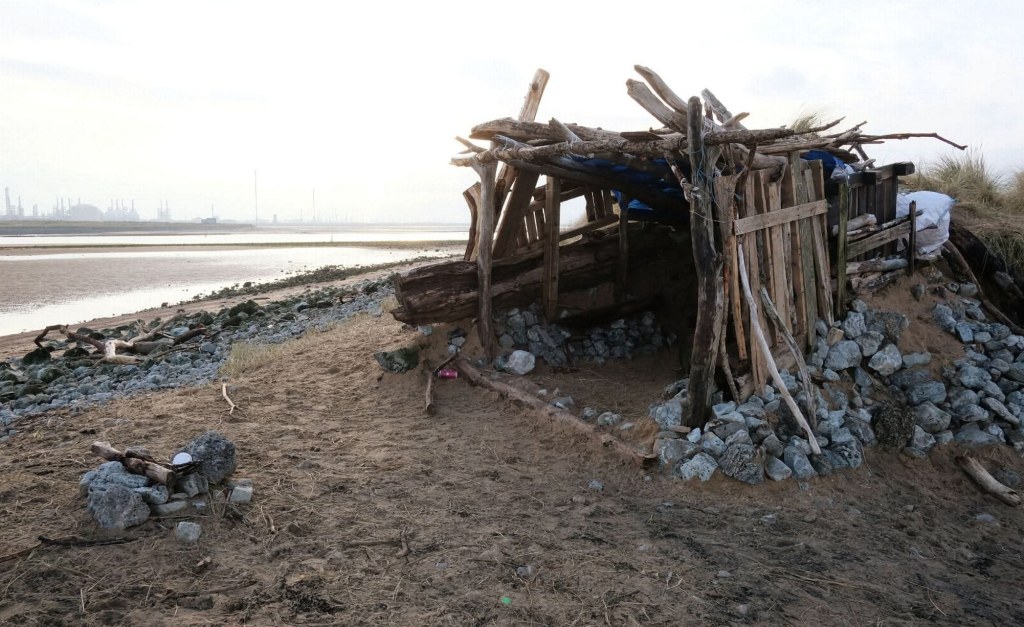
The commons are not just parks.
They include our beaches, our open spaces, our greens and the edges of our towns where the formal places gives way to something looser.
They also include something less visible: the freedom to use them.
I wrote recently about the paperwork involved in taking a small group of children on a walk. Nothing dangerous. Nothing unusual. Just a walk.
And yet the forms multiply.
Risk assessments.
Permissions.
Insurance confirmations.
Each one individually makes sense.
But together they create something else — friction.
Enough friction, and the simplest activities start to feel like organised expeditions.
The Rights We Talk About
Across the country there are growing campaigns around access to land.
The right to roam.
The right to forage.
The right to wild camp.
All important conversations about who gets to experience the natural world.
But sometimes I wonder if we’re missing something more basic.
What about the right to simply use a public park or open space without needing two weeks’ notice?
Not a festival.
Not a commercial event.
Just people doing things together.
Where Cohesion Actually Happens
When policymakers talk about community cohesion, they often imagine programmes.
Workshops.
Consultations.
Facilitated activities.
But cohesion rarely starts in meeting rooms.
It starts in places where people simply share space.
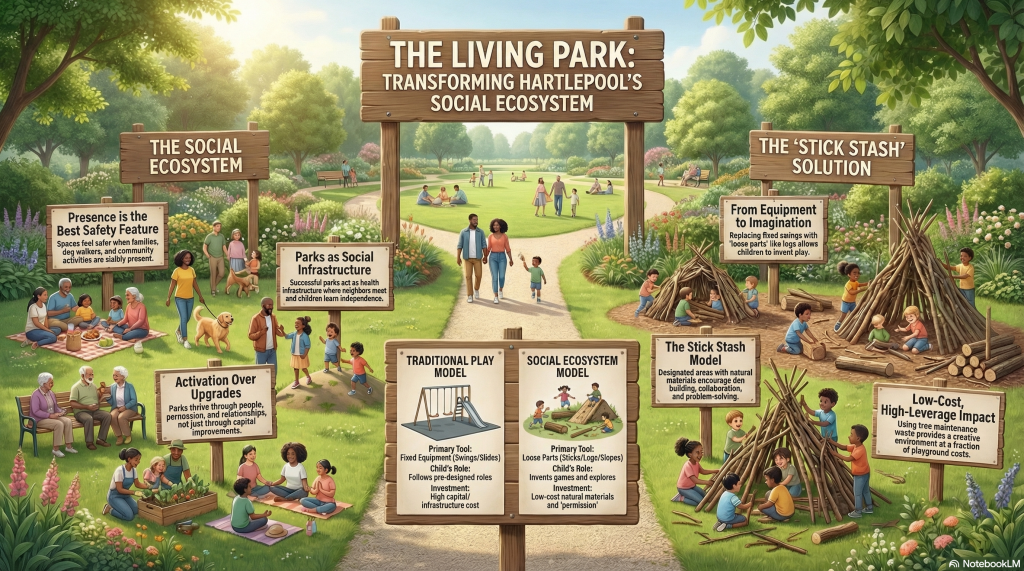
Parks and open spaces are some of the most powerful social infrastructure we have. They are free. Open to everyone. And flexible enough to hold many different things at once.
On a sunny weekend you see it clearly.
Families picnicking.
Teenagers kicking a football.
Someone walking a dog.
Children inventing games that no adult planned.
Someone quietly reading on a bench.
Different lives, different cultures, different generations — all occupying the same place without needing permission from one another.
That’s cohesion in its most natural form.
When Informal Becomes “An Event”
Residents can organise things too.
A street game.
A small gathering.
A group activity.
Informal. Friendly. Local.
But something interesting can happen the moment a gathering becomes a little more organised.
Once numbers grow.
Once something becomes visible.
Once someone might bring music, or food, or a bit of equipment.
Suddenly the rules begin to shift.
What was informal becomes an event.
And events trigger processes.
Two weeks’ notice.
Perhaps longer.
Three months if it’s larger.
Forms. Approvals. Risk assessments. Insurance checks.
None of these things exist for bad reasons.
But collectively they can create an unintended effect.
The moment community activity begins to grow — the moment it shows signs of life — the barriers increase.
The Missing Space Between Informal and Formal
What’s missing is the space in between.
The space where people can still do things together without it needing to become an “event.”
Where community organisations can meet in a park.
Share ideas.
Bring equipment.
Play games.
Test something new.
Be creative.
Where people can gather not as consumers of a programme, but as participants in a place.
That middle ground — between casual use and formal events — is where a lot of community life actually happens.
Or at least, where it could happen.
When Places Become “Assets”
Sometimes I wonder if something else has happened to our commons.
Have we silently marketised them?
Even our free, open places are now often described in the language of systems and balance sheets.
They become assets.
Assets need managing.
Assets need protecting.
Assets carry liability.
And slowly, subtly, the relationship between people and place shifts.
Instead of places belonging to communities, they begin to feel like things that must be protected from communities.
That framing feels uncomfortable to say out loud.
And to be fair, it’s not really about individuals.
Many people working in local government care deeply about their places. They’re passionate about parks, communities and public life. They want the same things everyone else does — vibrant spaces, safe environments, people enjoying where they live.
But systems have a strange habit of developing their own logic.
The Leviathan Problem
Thomas Hobbes famously described the state as a Leviathan — a powerful system created to maintain order.
James C. Scott, writing centuries later, explored how large systems begin to see the world in simplified, manageable ways. They categorise, regulate and standardise in order to function.
From the system’s perspective, this makes sense.
But lived reality is messier than systems like.
A spontaneous football match.
A group of kids exploring a park.
A walking quest through a neighbourhood.
Someone bringing music to a green space.
These things don’t always fit neatly into categories.
So the system defaults to caution.
The process appears.
The form appears.
And eventually that phrase we’ve all heard somewhere along the line appears too:
“The computer says no.”
Not because someone actively wanted to say no.
But because no one was there — or empowered — to say yes.
The missing yes
Yes to common sense.
Yes to play.
Yes to a group of children exploring their neighbourhood.
Yes to people using a park in ways that bring it to life.
Because sometimes the question feels strangely inverted.
Instead of asking why people should be allowed to use a public park, we find ourselves asking why they need permission at all.
It is, after all, a public park.
Let the People Who Care About Places Use Them
At Hartlepool Sport, my team are all superstars.
It’s a small team, but they are passionate, creative and motivated. More importantly, they genuinely care about their town and the people in it.
They are brilliant at bringing the fun.
Sometimes that means equipment and organised activities.
But often it doesn’t.
Sometimes it’s just chalk on a pavement, a few sticks, a bit of imagination and the confidence to invite people in.
A game starts.
Children gather.
Parents join in.
Someone laughs.
A park comes to life.
That’s exactly where I want my team to be — in our parks, alongside our community.
Not behind desks.
Not navigating layers of forms.
Because if I’m honest, it feels like a waste of their time and their talent to ask them to stop and complete paperwork every time they want to bring life to a public space.
Whether those forms are on paper, online or in an app doesn’t really change the underlying question.
What are we actually asking permission for?
To play?
To gather?
To take a group of children on a walk?
To bring people together in a public park?
Because when you step back and look at it, the answer should probably be obvious.
Reclaiming the Spirit of the Commons
Commons historically worked on a simple understanding.
They belonged to everyone.
Not in an abstract legal sense.
But in a lived, everyday way.
People used them.
They gathered.
They experimented.
They occasionally annoyed each other.
But through that shared use, something important emerged:
A sense of collective ownership.
When places belong to everyone, people tend to take care of them.
When places feel controlled from afar, people tend to disengage.
You can write policies about cohesion.
You can fund programmes about belonging.
But sometimes the simplest step might be remembering something older.
The commons was never meant to be watched over.
It was meant to be used.
 Northern Ambiguity
Leave a comment