
Sometimes the best way to understand a place is simply to walk it.
No surveys.
No clipboards.
No presentations.
Just a group of young people and a simple question:
What do you notice?
When a school decides to listen
One thing that has really stood out recently is how seriously Eskdale Academy have embraced gathering insight from their pupils.
Not as a token exercise.
But as a genuine belief that the voices of their children should be heard — loudly — by anyone willing to listen.
Teachers and staff have been exploring simple ways to understand how young people experience the town around them.
Where they go.
Where they don’t.
What they notice.
One exercise was surprisingly simple.
They asked Key Stage 2 pupils to map which local parks and green spaces they had visited.
On the surface it sounded like an easy question.
Hartlepool isn’t short of parks.
But the results were striking.
Some parks were familiar landmarks.
Others — sometimes only a short distance away — were places many pupils had never visited at all.
Not once.
Half a mile away
One example really stood out.
Rossmere Park is only about half a mile from the school.
Almost a straight line, too.
Which means it’s reasonable to assume that some of the children live even closer to the park than that.
So it was genuinely eye-opening when the mapping exercise showed that around half of some year groups had never been there.
Not once.
A park sitting just half a mile from their school simply wasn’t part of their lived geography.
It’s easy for adults to assume that parks and green spaces automatically become part of a young person’s world.
But clearly that isn’t always the case.
Sometimes places can sit nearby, technically open to everyone, yet still feel like somewhere else entirely.
And if nobody has taken you there before, there’s a good chance you simply never go.
The memories that do exist
What made the exercise even more interesting was hearing the different kinds of memories that did exist.
Several children talked about Halloween at Rossmere Park, when a free Pumpkins in the Park event had taken place there.
That moment had clearly stuck with them.
It had created a memory where the park felt lively, welcoming and worth visiting.
Which says something important.
Sometimes the difference between a space feeling distant or belonging to you isn’t about distance or facilities.
Sometimes it’s simply about having a reason to go once.
Because once a place becomes part of your memory, it becomes part of your map.
Walking the waterfront
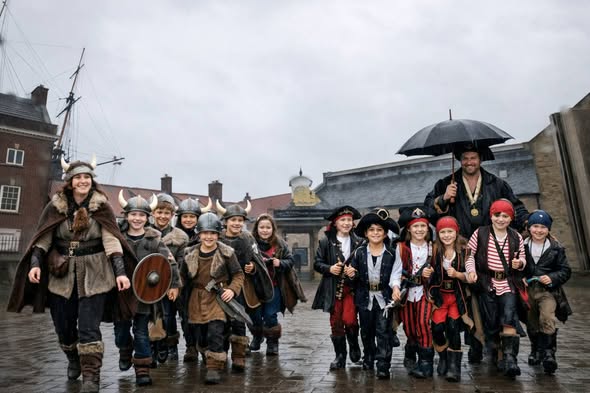
This thinking sits behind the Walking Quest we recently ran with Eskdale pupils.
The idea is simple.
Take young people somewhere and ask them to look at it with fresh eyes.
What do they notice?
What do they like?
What feels strange?
What would they change?
Recently we walked with a group of Year 4 pupils towards the waterfront.
For some of them, it was their first time properly seeing that part of the town.
Which is always a useful reminder.
Places we assume are “open to everyone” aren’t always experienced that way.
Sometimes the map of your world is only a few streets wide.
What young people notice
What’s fascinating about walking conversations is what young people choose to notice.
It’s rarely the things adults focus on.
They notice:
Broken glass.
Dog mess.
Litter.
Noise.
Whether somewhere feels looked after.
They’re constantly reading the signals a place sends.
Spaces communicate whether they feel welcoming, neglected, safe, or somewhere you probably shouldn’t hang around.
Young people pick up on those signals immediately.
And they’re always asking themselves a silent question:
Is this place for me?
Movement is already everywhere
Another theme that keeps surfacing in this work is that movement already exists everywhere.
Families walking dogs twice a day.
Children scootering to school.
Parents on their feet through long shifts.
Grandparents walking to the shops.
People are already active.
But much of that movement doesn’t show up in the statistics we normally use to measure participation.
Which can create a strange disconnect.
From a distance, a place might appear inactive.
Up close, it’s full of movement.
Just not always organised movement.
What this means for commissioning
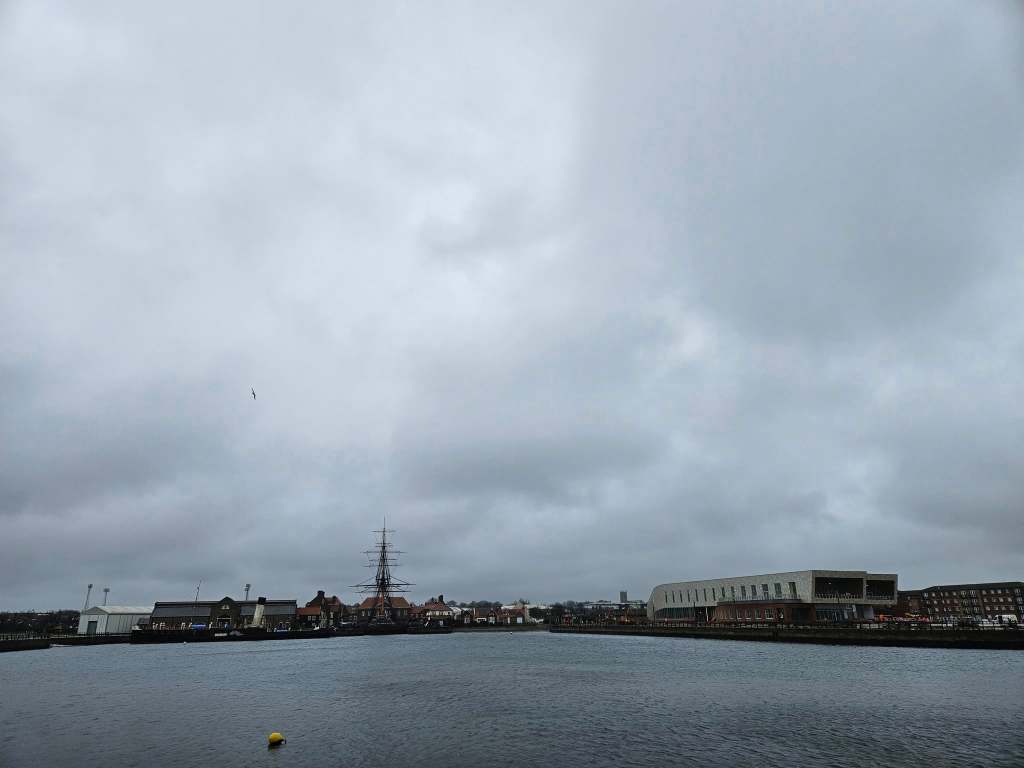
These insights also have implications for how we think about investment in place.
Take Pride in Place.
It’s a hugely welcome investment in Hartlepool. Funding of this scale doesn’t come along very often, and it creates opportunities the town hasn’t had for years.
But like many programmes, the funding split tells its own story.
Roughly 75% is capital, with 25% for revenue.
Capital matters. Massively.
New facilities, improved spaces and better infrastructure are the things people will see and use for decades.
You only have to look at the almost-complete Highlight Hub at the Marina to see that.
The Eskdale children were already asking questions about it during their Walking Quest.
It’s a £35 million investment that will be fantastic for the town.
Personally, I’m looking forward to seeing my own boys using it with their local swimming club.
But the Walking Quest highlighted something else too.
Even in miserable weather, the Eskdale children had a brilliant time.
Not because of a new building.
Not because of shiny facilities.
But because there were grown-ups creating an experience with them.
People asking questions.
People guiding the walk.
People making the place interesting.
If someone had been formally commissioning that Walking Quest — rather than Hartlepool Sport simply getting on with it — the cost would almost certainly have come from revenue budgets.
And that distinction matters.
Capital and revenue aren’t the same thing.
We absolutely need the physical things — the buildings, equipment, parks and facilities that make a town feel cared for.
But those spaces don’t automatically come alive on their own.
Capital builds places.
People bring them to life.
Without the people — teachers, youth workers, coaches, volunteers and organisers — even the best facilities can sit waiting to be used.
Places come alive when someone invites others in.
Even on the Walking Quest, it quickly becomes clear that young people are often just one guide away from discovering a new part of their town.
In martial arts we might call that person a Sensei — someone who has simply walked the path before you.
What happens next
One of the nicest outcomes from the recent Walking Quest is that the Eskdale children are already asking when they can do another one.
They’ve clearly caught the bug for exploring their own town.
The next walk will be somewhere much closer to home.
Rossmere Park.
Their local park.
Which makes it even more interesting, given that earlier mapping work suggested that around half of some year groups had never actually visited it before.
Half a mile away.
Almost a straight line from the school.
And yet still, for many of them, unexplored.
I’m genuinely curious to hear what they think about it.
What they notice.
What they like.
And perhaps most importantly, how they would like to use the space more.
Because if the past few months of insight work have taught us anything, it’s that young people are often very clear about what makes a place feel welcoming, fun and alive.
Sometimes a place doesn’t need rebuilding.
It just needs someone to say, “come and see this.”
And suddenly the map of a child’s town gets a little bigger.
 Northern Ambiguity
Leave a comment