Inside the craft of building high performance young athletes
I’ve just come back from refereeing at the European Karate Championships.
Cadets. Juniors. U21s.
Big arena. Bright lights. Flags on tracksuits.
Young athletes chasing margins most people would never notice.
From the outside it looks dramatic.
Explosive exchanges.
Split-second decisions.
Medals. Podiums. Anthems.
Then I got home and found the Winter Olympic Games on TV.
Different sports. Same thing.
Years of work compressed into minutes, sometimes even less.
How often do we just talk about sport only in the language of outcomes?
Medals.
Selections.
Results.
As if that’s the whole story.
Much of my day job sits in the “sport for development” world.
Participation.
Health.
Belonging.
Prevention.
All important. All necessary.
But sport is bigger than that.
Performance and excellence are worthwhile in their own right.
Not because they fix something.
Not because they tick a policy box.
Just because doing something well — exceptionally well — is a valuable human pursuit.
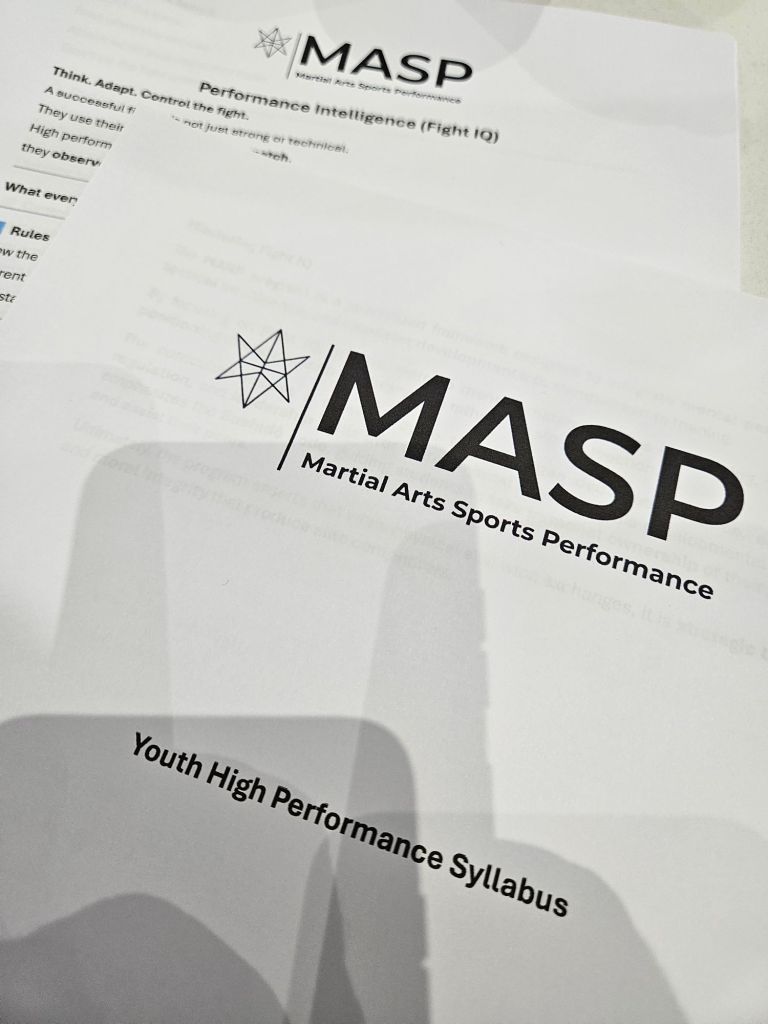
Alongside the place-based and community work, we’ve also been building something through our Martial Arts Sports Performance (MASP) program – a Youth High Performance pathway.
A youth sports performance environment.
When people hear “high performance”, they tend to picture intensity.
More sessions.
Harder sessions.
More shouting.
More sweat.
It isn’t like that at all.
Mostly, it’s boring.
High performance here isn’t intensity.
It’s reliability.
It’s turning up on time. Every time.
Warm-ups done properly, not rushed.
Basics repeated until they’re automatic.
Footwork drilled until nobody has to think about it.
Fitness that isn’t exciting but quietly does its job.
It’s filming technique and reviewing it frame by frame.
It’s learning the rule book inside out.
It’s small corrections that take weeks to bed in.
It’s sleep, nutrition, recovery, conversations most teenagers don’t find glamorous.
And then doing all of that again next week.
There’s no secret sauce.
But there is structure.
Some nights that looks like scenario sparring and problem-solving under pressure.
Some nights it’s conditioning work that nobody enjoys but everybody needs.
Film review.
Tactical discussions.
Decision-making when you’re tired.
Helping the younger ones.
Taking responsibility for the space.
Nothing you could put on a poster.
Nothing that looks impressive on social media.
But it’s deliberate.
Every piece designed to remove luck and replace it with preparation.
With the Winter Olympics still going on this week, it brings it home that this is the bit people often misunderstand.
Medals are moments.
Standards are systems.
Moments are visible.
Systems aren’t.
But systems are what produce the moments.
We talk a lot — rightly — about what sport can do for society.
But sometimes sport doesn’t need to justify itself like that.
Sometimes it’s enough that a young person learns what it feels like to commit to something difficult.
To chase mastery.
To lose and come back better.
To hold themselves to a higher standard even when no one is watching.
Even if they never stand on a podium.
Even if there’s never a medal.
There’s still value in that.
Because excellence isn’t really about the medal.
It’s about the habits you had to build to deserve one.
And those tend to stick around long after the podium and camera’s are packed away.
 Northern Ambiguity
Leave a comment