Notes on Stewardship from the Ground
If you look only at the paperwork, Place Expansion can seem like a set of plans, milestones and reports.
If you sit in the work long enough, it feels very different.
It feels like conversations in cold parks and along the prom.
Like volunteers staying late because they care.
Like young people testing ideas that adults didn’t think would work.
Like trying to hold trust while deadlines tick in the background.
Hartlepool Sport — one of my companies — was built on the early learning from Sport England’s Local Delivery Pilots, the precursors to what we now call Place Expansion. So when this next phase arrived in Hartlepool, hopefully as the start of long-term investment in the town, it didn’t feel new so much as familiar territory.
Another chapter in the same journey.
From the beginning, we kept notes.
Sometimes they looked like field notes scribbled after a session.
Sometimes meeting minutes.
Sometimes long emails to and from the steering group.
Not because anyone asked us to at first, but because we needed a way to make sense of what was actually happening.
Over time those notes became less of a reporting tool and more of a leadership diary — a record of the small choices you make every week when you’re trying to do place-based work properly.
Looking back, a few patterns keep resurfacing.
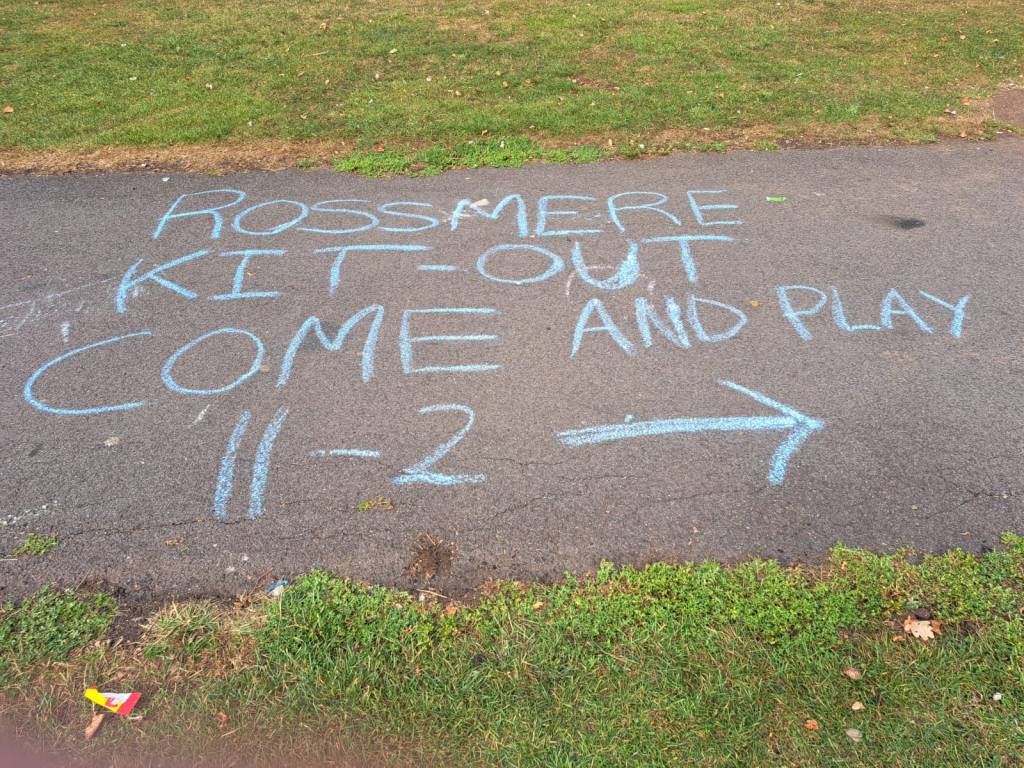
The first is simple: showing up matters more than signing off.
Legitimacy doesn’t come from being named in a structure chart.
It comes from being there.
From the same faces turning up each week.
From remembering names.
From closing the loop when you said you would.
Through our involvement with the Joseph Rowntree Foundation’s SeaChange work and other community research practice, we were reminded that people rarely ask, “Who commissioned this?”
They ask, quietly, “Do you actually care about this place?”
So sometimes we chose to go slower.
To keep relationships steady rather than rotating people too quickly.
To protect informal conversations rather than formalise everything at once.
To prioritise trust over tidy processes.
From the outside, that can look inefficient.
From the inside, it’s how anything meaningful gets built.
Because without trust, nothing really sticks.
Early on, we also felt friction.
Nothing dramatic — just the subtle tension between how real life unfolds and how neatly learning is sometimes expected to appear on paper.
Questions about pace.
About consistency.
About certainty.
In the past, I might have treated that tension as something to smooth over.
This time, we treated it as information.
Because in place-based work, tension is often the first sign you’re learning.
When something doesn’t quite fit, it’s usually not obstruction.
It’s the system telling you: pay attention.
Some of our best adjustments came from exactly those moments.
Another lesson came when we were asked for more structured, retrospective weekly reflections.
On paper, that makes sense. Reflection is healthy.
But anyone who has worked in community settings knows this: you rarely understand the significance of a moment while it’s happening.
Insight accumulates. It doesn’t arrive on schedule.
Trying to reconstruct neat weekly stories after the fact felt like we’d be inventing certainty that didn’t really exist.
And that didn’t feel honest.
So instead, we focused on capturing learning in real time — simple, live logs that reflect the messiness of practice as it unfolds.
Messier.
More human.
But true.
I’ve come to believe that honest ambiguity is more useful than polished fiction.
We noticed something similar around co-design.
The closer insight sat to the people actually living the experience, the better it got.
Volunteers gathering stories.
Children shaping questions.
Young people challenging our assumptions.
But we also learned that “co-design” can sometimes be used to disguise where power really sits.
So we tried to do the opposite.
When we developed youth governance principles, adults wrote the guardrails openly and accountably. Not because young people aren’t capable, but because it isn’t their job to design the systems that govern them.
Our job is to create systems worthy of their participation.
Strangely, being explicit about power made everything feel lighter.
Nothing hidden. Nothing performative. Just clarity.
By December, another truth surfaced.
Everyone was tired.

The kind of tired you only notice when you finally stop.
It would have been easy to push through and keep proving momentum. Instead, we paused — just enough to consolidate, reflect and recover.
At first it felt uncomfortable, like we were breaking some unwritten rule about constant activity.
But conversations improved. Decisions sharpened. People felt human again. Followed by a slow return in January.
It reminded me that pace isn’t neutral.
Going too fast doesn’t just risk mistakes — it erodes care.
And without care, place-based work becomes transactional.
Finally, there’s the quiet work.
If you skim a project plan, you see events and outputs.
But a lot of our energy has gone into things that don’t photograph well: building learning systems, writing principles, strengthening our theory of change, helping volunteers gather insight themselves.
Infrastructure.
The plumbing, not the fireworks.
It can feel invisible.
But without it, everything else is fragile.
With it, the work lasts.
After years of doing this — from LDPs to Place Expansion to Pride in Place — my thinking has shifted.
Less focus on “Are we compliant?”
More focus on “Are we being good stewards of this place?”
Stewardship feels like the right word.
Holding trust.
Protecting learning integrity.
Being honest about uncertainty.
Designing for sustainability, not optics.
If this programme is really about long-term change, then these quieter qualities matter just as much as delivery metrics.
Maybe more.
So the invitation — to ourselves as much as anyone else — is simple:
Learn together.
Share what’s messy as well as what’s neat.
Value care as much as speed.
Treat trust as infrastructure.
Because in the end, places don’t change because we reported well.
They change because people felt respected, listened to, and stayed in the work long enough to make it stick.
That kind of legitimacy can’t be mandated.
You can only earn it.
 Northern Ambiguity
Leave a comment